When children begin learning to code or solve mathematical problems, they’re not just picking up technical skills — they’re developing one of the most powerful abilities humans have: abstract thinking.
It’s also one of the hardest.
Coaches see this firsthand. A child knows what they want their game to do, but they can’t quite explain the logic. They understand the result, but struggle to break it into steps. They can imagine the final picture, but translating it into instructions is a whole different challenge.
And that’s exactly why it matters.
What Is Abstract Thinking?
Abstract thinking is the ability to work with ideas rather than just literal, concrete objects. It’s thinking in terms of:
- patterns
- relationships
- rules
- cause and effect
- “what if?” scenarios
It’s the mental leap from solving equations using concrete numbers like 52 + 76 = 128 to seeing the relationship x + y = z.
Where concrete thinking is about what is right in front of us, abstract thinking deals with what we can’t see yet — possibilities, structures, patterns, and logic.
Why Is Abstract Thinking So Hard for Kids?
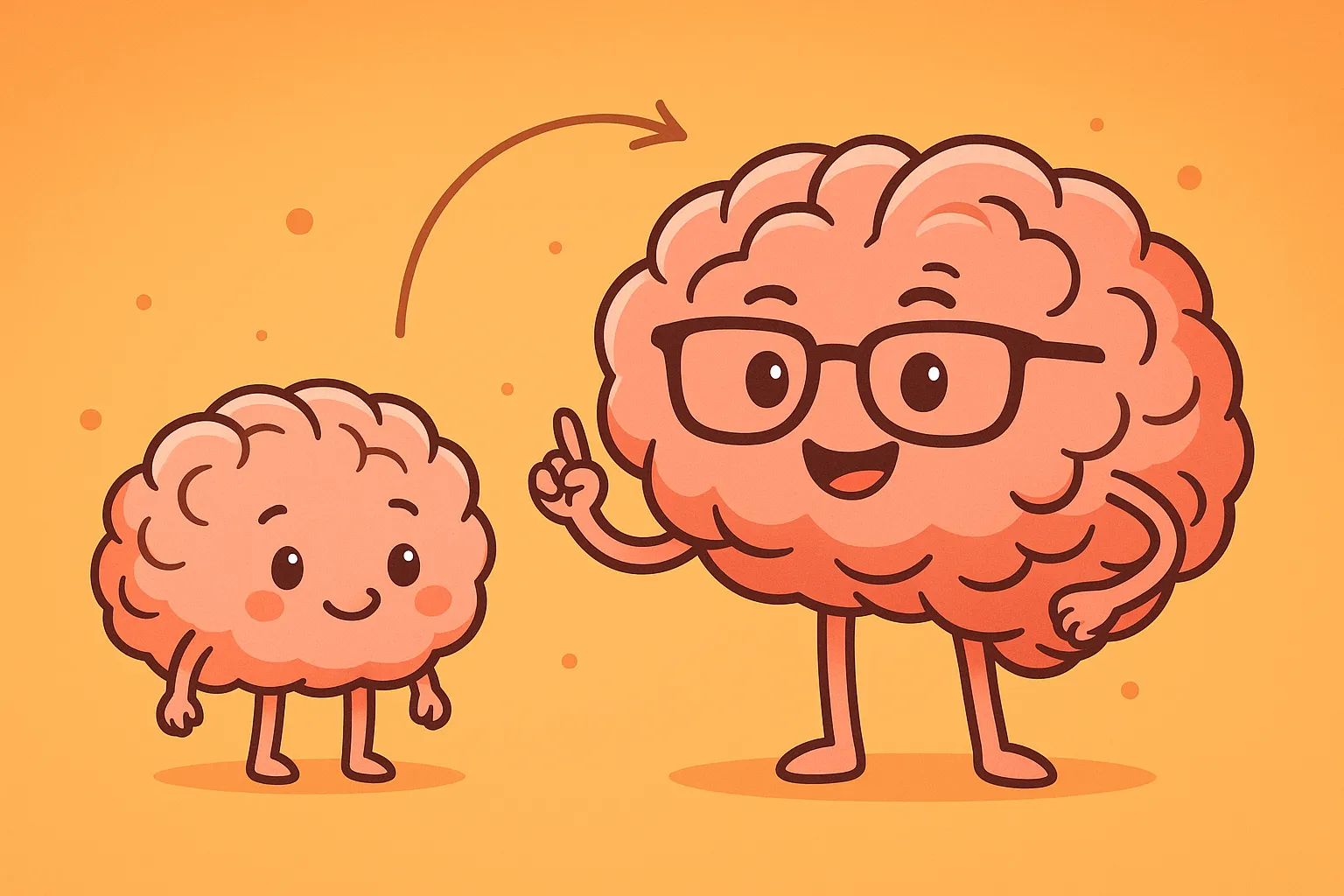
Because it’s supposed to be. Their brains are literally not ready yet. Abstract reasoning relies heavily on the prefrontal cortex — the area responsible for:
- symbolic thinking
- planning
- hypothetical reasoning
- logical manipulation of ideas
This region develops slowly and continues maturing into early adulthood. Manipulating symbols (like x, or imagining hypothetical paths) requires mental hardware they’re still building.
So children naturally start with concrete thinking. They understand what they can see and manipulate. If they can see it, hold it, or act it out → they get it. If it’s invisible, conceptual, or symbolic → their mental model collapses.
Here are somes examples to illustrate this:
- They understand “3 apples”.
- “3” as an abstract quantity separate from apples? Much harder.
- A variable representing any number? Even harder.
Abstraction demands detaching ideas from real objects. It's a non-trivial cognitive leap. To think abstractly, a child has to:
- create mental images
- hold multiple ideas in working memory
- manipulate those ideas without external tools
In other words: it’s demanding. It stretches the brain. It demands a lot of working memory, and kids have far less working memory capacity than adults.
How does Maths and Coding Help?
Coding and mathematics help kids develop abstract thinking because both subjects train the brain to move from concrete → symbolic → abstract reasoning in a structured, repeatable way.
They act like training wheels for abstraction: turning invisible ideas into tangible steps children can see, test, and adjust.
1. They turn big ideas into small, manageable parts
A maths problem or block of code demands clear, step-by-step thinking. Kids learn to:
- break a goal into pieces
- follow a sequence
- check each step for errors
This mirrors the exact cognitive process behind abstract reasoning: taking something complex and mentally organising it into a logical structure.
2. They teach children to work with symbols
Maths introduces symbols like x, =, >, while coding introduces variables, conditions, and functions.
At first, these feel unfamiliar because nothing in the real world looks like this — but once kids start using symbols, they begin forming mental models without relying on physical objects.
That leap from “things” to “ideas” is abstract thinking in action.
3. They encourage pattern recognition
Maths patterns: number sequences, shapes, operations
Coding patterns: loops, events, repeated behaviours
Children begin to recognise that if something works once, it can work again — and even be generalised into a rule. Pattern recognition is one of the core building blocks of abstraction.
4. They teach cause and effect logically, not emotionally
“If I change this… that happens.”
Coding forces this type of clarity because a small mistake breaks the whole programme or game.
Maths works the same way: adjust one value and the entire equation changes.
Children learn that outcomes follow rules — not guesses, not feelings.
5. They build persistence and mental flexibility
Debugging code or solving equations teaches kids that:
- mistakes are part of the process
- the brain grows by working through challenging problems
- trying an approach, evaluating it, and trying again is normal
This cycle is exactly how abstract reasoning strengthens over time.
In short: maths gives children the language of logic, while coding gives them the playground to apply it.
Together, they strengthen the very skills the prefrontal cortex needs in order to grow.
Abstract Thinking Is What Makes Us Human
Humans didn’t invent tools, art, science, or technology because we’re stronger or faster than animals.
We did it because we can think abstractly.
We can imagine possibilities, plan for the future, and see patterns that aren’t visible on the surface. When kids build games or debug code, they’re exercising the same type of thinking that powers engineering, science, music, and entrepreneurship.
Whether or not they become developers one day, this ability stays with them.
Conclusion: Hard Is Good
Abstract thinking is hard because it sits at the foundation of every advanced skill we value: creativity, problem-solving, innovation, logical reasoning, and the ability to work with ideas rather than just objects.
Maths and coding make this challenge fun, practical, and approachable. Both subjects give children a structured way to explore patterns, test ideas, work with symbols, and think in steps. These are exactly the skills their developing brains need.
So when your child struggles with a maths concept or gets stuck debugging code, it isn’t a setback. It’s a sign that their brain is stretching, strengthening, and growing.