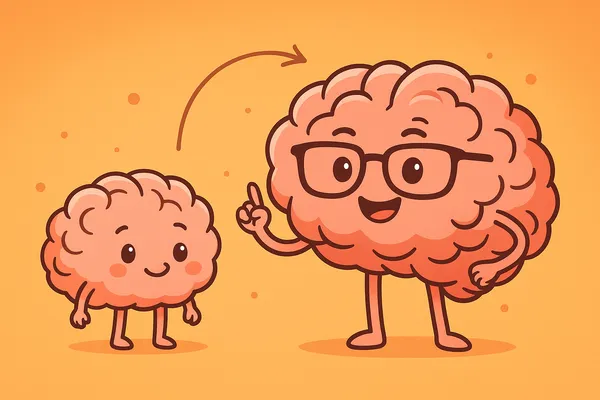
As parents, educators or mentors, we often instinctively want to make children feel good about themselves — telling them they’re “smart,” “talented,” or “naturally gifted.” And while such identity‑based compliments feel harmless (even kind) on the surface, a growing body of research suggests they can backfire. By contrast, praise that emphasises effort, strategies, or improvement tends to lead to stronger motivation, better resilience, and healthier attitudes toward learning.
Here’s a look at the research — and why shifting from identity praise toward encouragement of effort may help children thrive.
🧠 The core research: identity praise vs. effort praise
The foundational work comes from a study by Claudia Mueller and Carol Dweck (1998), which examined how different kinds of praise affect children’s motivation and performance.
In their experiments, 5th‑grade students were given fairly easy tasks (from a recognised intelligence test), then randomly assigned to one of three feedback conditions:
- “Intelligence / ability praise” — e.g. “That’s a really good score. You must be smart at this.”
- “Effort praise” — e.g. “That’s a really good score. You must have worked hard at these problems.”
- Neutral praise (control) — e.g. “That’s a really good score.”
What they found:
- Children praised for being “smart” became more focused on performance and proving their intelligence. They showed less persistence, less enjoyment, and lower performance when faced with harder tasks or after failures — compared to kids who got effort praise.
- Ability‑praise children were more likely to attribute failure to lack of ability (“I’m just not smart enough”), leading to defensiveness, self‑blame or avoidance.
- In contrast, children who were praised for effort typically adopted a “growth mindset” — believing abilities can be improved through work. They were more likely to embrace challenges and persist through difficulty.
In a later study (2018), Shufen Xing and colleagues confirmed these patterns: kids given ability praise were more likely to self‑handicap (e.g. make excuses or avoid trying) after failure, and their performance improvement after setbacks was weaker than peers praised for effort or given no praise.
Taken together, these findings suggest that identity‑based compliments — however well‑meaning — can unintentionally create a fragile sense of self‑worth tied to “being smart.” Meanwhile, praising process, effort and improvement helps build motivation, resilience, and a love of learning.
Why does effort‑focused encouragement work better than identity praise?
1. It fosters a growth mindset
When children are praised for effort (“You worked really hard”), they internalise the idea that skills and intelligence are not fixed — they can grow with dedication.
2. Encourages persistence and willingness to try hard tasks
If success is framed around effort, children become more willing to tackle difficult or unfamiliar challenges. They see failure as a step in the learning process, not as proof of “lack of talent.”
3. Builds resilience — less fear of failure
Children praised for who they are (“smart”) may fear failure because it challenges their identity. Effort‑based praise reduces that fear by separating performance from fixed traits, making setbacks less personal and more about process.
Instead of aiming to simply “look smart,” children aim to learn, improve, and master skills. This has benefits far beyond one test or assignment — it builds lifelong learning habits.
What about identity praise — is it always harmful?
Most of the evidence points to identity‑based praise (sometimes called “person praise”) as riskier — especially in situations involving challenge or potential failure.
However, it's not necessarily that we should never praise children’s qualities. Instead, many researchers argue for a balanced, mindful approach: use praise strategically — focusing on effort, improvement, and process — without turning compliments into fixed labels.
Long‑term observational studies of toddlers found that when parents emphasised effort early on (even between 14–38 months), children tended to adopt incremental beliefs about ability by age 7–8. That suggests early reinforcement of effort over identity can shape enduring mindsets.
What this means for parents, teachers and mentors
- When a child completes a task or shows improvement — praise what they did, not who they are. E.g. “I saw how hard you worked on that,” “You kept trying even when it was tough,” or “Your problem‑solving approach really helped.”
- Frame challenges and failures as opportunities to learn, not as judgments on ability or worth.
- Encourage children to value growth, effort, and improvement, rather than fixed traits.
- Help students develop resilience by normalising mistakes and emphasising persistence over perfection.
Final thought
Praise feels good, both for the giver and the receiver. But as the evidence suggests, how we praise — effort vs. identity — can deeply influence a child’s motivation, resilience, and attitude toward learning.
Encouraging effort, improvement, and process doesn’t merely flatter — it empowers. And that may be one of the most valuable gifts we can give children as they grow, learn, and face challenges.